
A tensile membrane is waterproof as a material, but “the fabric doesn’t leak” and “the roof performs well in a real monsoon” are two different claims — the second one depends on geometry, slope, drainage and installation quality just as much as the fabric itself. Here’s what actually determines how a tensile structure handles heavy Indian rain.
Membrane water resistance vs whole-system weather performance
PVC and PTFE membranes are themselves genuinely waterproof materials — water doesn’t pass through the fabric itself under normal conditions. But a roof’s real-world rain performance depends on far more than the material: how the roof’s shape sheds water, where seams and edges are detailed, how drainage is sized and where it discharges, and how precisely everything was installed. A structure can use a perfectly good membrane and still perform poorly in heavy rain if the geometry, drainage or installation weren’t right — which is why “waterproof fabric” and “reliable in monsoon” aren’t the same guarantee.
Why water ponding matters
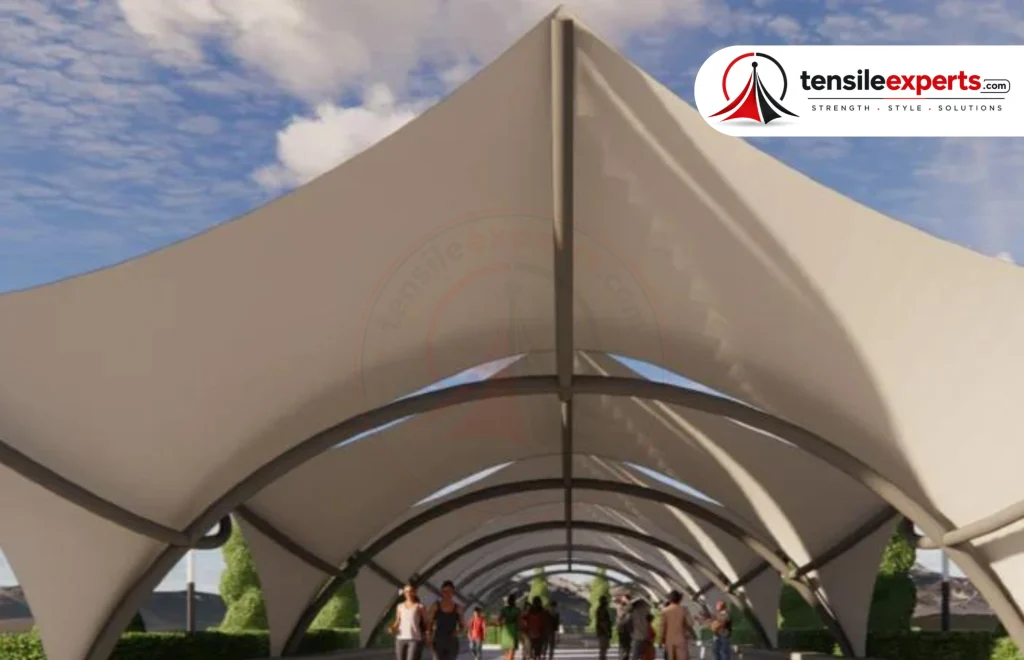
Ponding — water collecting and sitting on the membrane instead of draining away — is one of the more serious things that can go wrong on a tensile roof, and it’s a design and geometry issue more than a material one. A flat or under-curved section of membrane has nowhere for water to go, so rain collects, adds real unplanned weight, and can deepen the low point further as the fabric deflects under that weight — a feedback effect that gets worse the longer it’s left. This is exactly why tensile membranes are engineered with double curvature (curving in two directions, like a saddle) rather than left flat, giving the surface a defined slope and stiffness that a flat or single-curved membrane doesn’t have. Curvature alone doesn’t guarantee water can’t accumulate, though — properly developed double-curved geometry, correct prestress and drainage detailing work together to reduce the risk of water accumulation, which is why the sections below cover tension and drainage as equally necessary, not optional extras once the shape is right.
Geometry, slope and tension work together
A tensile roof’s shape is worked out during design specifically to create clear high points and low points, with enough fall between them that water genuinely moves toward drainage rather than sitting still. Correct prestress — the tension the membrane is put under during installation — keeps that intended shape stable under the added weight of rain and the force of wind, rather than letting the surface sag or shift once it’s loaded. Get the geometry or the tensioning wrong, and even a well-made membrane can develop exactly the ponding risk good design is meant to prevent.
Drainage: gutters, downpipes and edge detailing
Once water reaches a low point, it needs somewhere real to go — gutters and downpipes sized for the roof’s actual catchment area and the region’s real rainfall intensity, not a generic assumption. Edge details, where the membrane meets its supporting cable or frame, are worth particular attention, since a poorly detailed edge can let wind-driven rain in even when the main membrane surface is performing exactly as designed. For multi-peak or valley roof forms, each valley needs its own properly sized drainage path — a single downpipe serving more catchment area than it was sized for is a common, avoidable design gap.
Wind-driven rain
Monsoon rain in India rarely falls straight down — wind typically drives it at an angle, which changes how it interacts with a structure’s edges and openings compared to still-air rainfall. A gutter or downpipe sized only for vertical rainfall can be overwhelmed when wind is actively pushing additional water toward it, and edge details that would be fine in calm rain can let water through when it’s arriving at an angle. This is one of several reasons drainage and structural design are worked out together during engineering, not treated as separate problems solved independently.
Rain-performance factors at a glance
| Factor | What can go wrong | Design/maintenance consideration |
|---|---|---|
| Geometry/curvature | Flat or under-curved areas pond water | Double-curved (anticlastic) form engineered during design |
| Slope | Insufficient fall leaves water sitting | Adequate slope built into the roof shape toward drainage points |
| Prestress/tension | Under-tensioned fabric sags and can deepen a low point | Correct tensioning during installation, verified before handover |
| Gutters/downpipes | Undersized for actual catchment area or rainfall intensity | Sized to the roof’s real catchment and regional rainfall |
| Edge details | Wind-driven rain enters at poorly sealed edges | Detailed specifically for angled, wind-driven rain, not just vertical fall |
| Debris/blockages | Leaves and dust block valleys and downpipes over time | Cleared ahead of monsoon, not discovered mid-season |
| Multi-valley roofs | One downpipe serving too much catchment area | Each valley engineered with its own adequately sized drainage path |
Why this is engineered, not eyeballed
None of the geometry, slope or tension decisions above are made by eye once construction starts — they’re worked out during the design and engineering stage, using form-finding analysis that models how the membrane’s shape behaves under its own tension before any fabric is cut. This is also why a design genuinely proven at one site doesn’t automatically transfer to another: catchment area, local rainfall intensity and the specific roof form all feed into how much drainage capacity a particular structure actually needs, and getting this stage right is far cheaper than discovering a drainage shortfall after installation.
Regional rainfall differences matter for planning
India’s rainfall pattern genuinely varies by region, and drainage planning benefits from reflecting that rather than using one generic assumption everywhere. A project in Delhi NCR, which typically sees concentrated monsoon-season rainfall over a few months, may reasonably plan drainage differently than a project in a consistently high-rainfall or coastal environment, where heavier, more sustained rain intensity is a year-round design consideration rather than a seasonal one. This isn’t about one region being “harder” than another — it’s about sizing drainage to the real rainfall data for the actual site, which is exactly what a genuine site survey and engineering process does.
Debris blockage deserves its own mention because it’s such a common, avoidable cause of drainage failure — leaves, dust and construction debris accumulating in a valley or downpipe over a dry season don’t announce themselves until the first heavy rain reveals the blockage, often as water overflowing somewhere it was never meant to. Nearby trees, ongoing construction activity, and high-dust surroundings all increase how often this needs checking specifically, on top of the general pre-monsoon inspection.
Maintenance ahead of and after monsoon
Good design only stays effective if drainage paths are kept clear — gutters, downpipes and valleys need to be checked free of leaves, dust and debris before the season starts, and rechecked afterward for anything that collected during it. This is covered in more detail, alongside the rest of a structure’s routine care, in our maintenance and inspection guide.
Common mistakes worth avoiding
What tends to go wrong
- Treating drainage as an afterthought instead of part of the roof-shape design
- Assuming “waterproof fabric” means the whole system is guaranteed leak-proof
- Sizing gutters/downpipes generically instead of for the actual catchment and rainfall
- Skipping pre-monsoon drainage checks until water is already collecting
What keeps a roof performing through monsoon
- Geometry and drainage engineered together from the start
- Edge details specifically accounting for wind-driven rain
- Drainage checked clear before and after the season
- Tension verified rather than assumed correct after installation
FAQ
Is a tensile structure 100% waterproof?
The membrane material itself is waterproof, but “100% waterproof in any conditions” isn’t a responsible blanket claim for a whole system — real performance depends on geometry, drainage design and installation quality together, not the fabric alone.
Why does water pond on some tensile roofs?
Usually because the surface is too flat or under-curved at that point, or the tension has shifted since installation — both are geometry/engineering issues, addressed by correct double-curved design and verified tensioning, not by the fabric choice.
Can a tensile structure handle Indian monsoon intensity?
Yes, when properly engineered — correct geometry, adequate slope, sized drainage and good edge detailing. It’s used across India specifically for this reason, though it depends more on design and installation quality than a flat, solid roof does.
What is wind-driven rain, and why does it matter?
It’s rain arriving at an angle rather than straight down, common during monsoon wind gusts. It can overwhelm drainage sized only for vertical rainfall and enter at edge details that would otherwise be fine — both are accounted for in proper design.
Does drainage planning differ by region in India?
Yes — rainfall intensity and pattern genuinely vary, so drainage sized for one region’s real rainfall data isn’t automatically right for another. This is confirmed during design for the actual site, not assumed generically.
Getting the geometry, drainage and tensioning right for your specific site starts with a real design and engineering process — see Planning a Tensile Structure Project: A Step-by-Step Guide for how that works, and our foundation and site preparation guide for how drainage discharge ties into the site itself. If wind and rain both matter for your project, our wind load and design guide covers the other major weather consideration.

